Penguins

Birds that gave up the sky for the sea, and got very good at it.

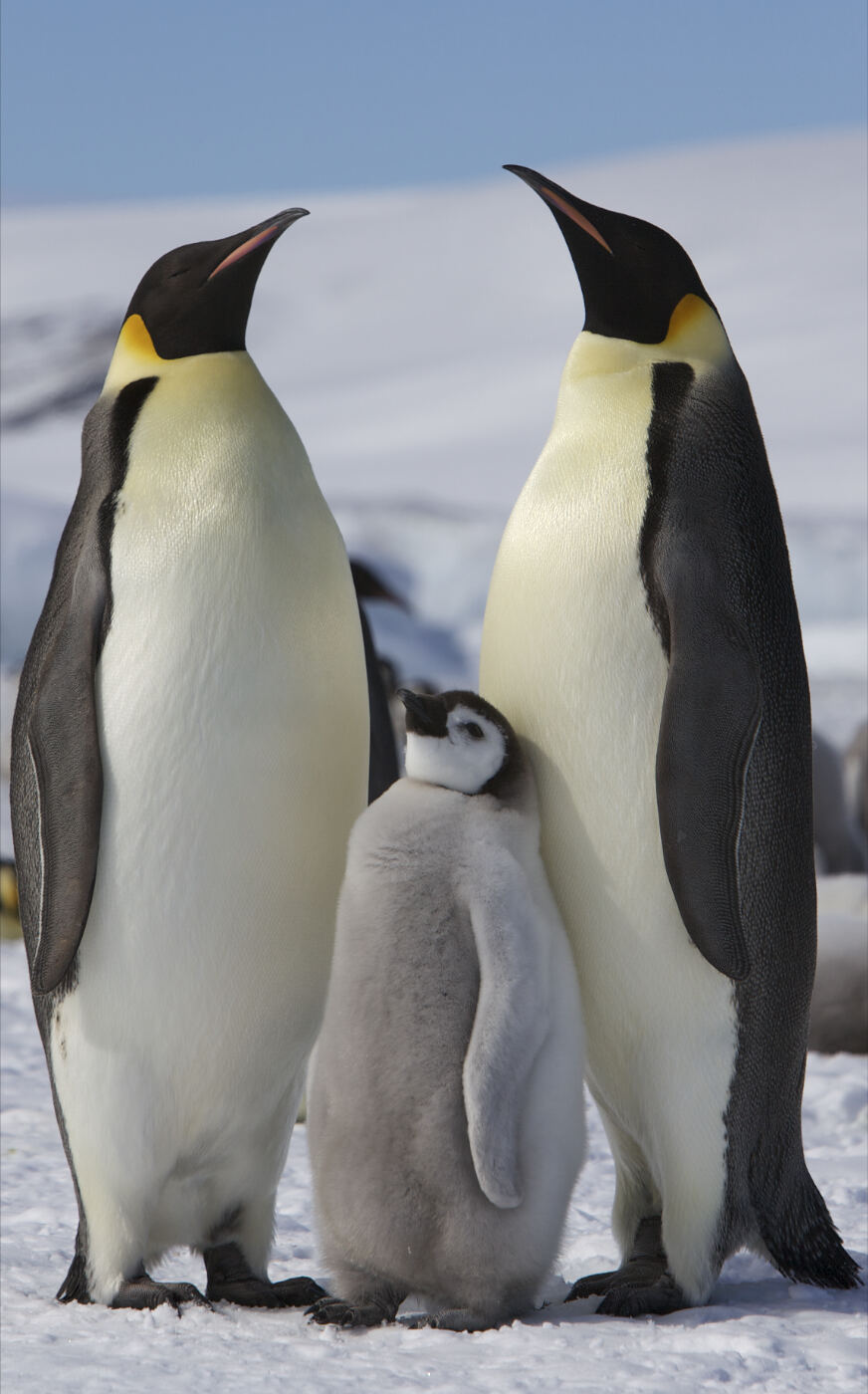
Emperor penguins, Snow Hill Island. Photo: Ian Duffy, CC BY 2.0

Built for water

Penguins are flightless seabirds. Their wings have become stiff flippers, their bones are dense instead of hollow, and their bodies are shaped like torpedoes. On land they waddle. Underwater they fly, chasing fish, krill and squid at speed.

Their black backs and white fronts are camouflage called countershading: from above they blend into the dark sea, from below into the bright surface.

~18living species
1.1 mheight of the emperor, the tallest
~33 cmheight of the little penguin, the smallest
500 m+depth an emperor can dive to

Seven to know

From ice shelves to equatorial lava, here are seven species that show how far the family has spread.

Adult emperor penguins with a fluffy grey chick on snow

Emperor penguin

Aptenodytes forsteri

The largest penguin, up to about 40 kg. Emperors breed on Antarctic sea ice in the dead of winter. The male balances the egg on his feet for about two months, eating nothing, while huddling with thousands of others against the wind.

Photo: Ian Duffy, CC BY 2.0, via Wikimedia Commons
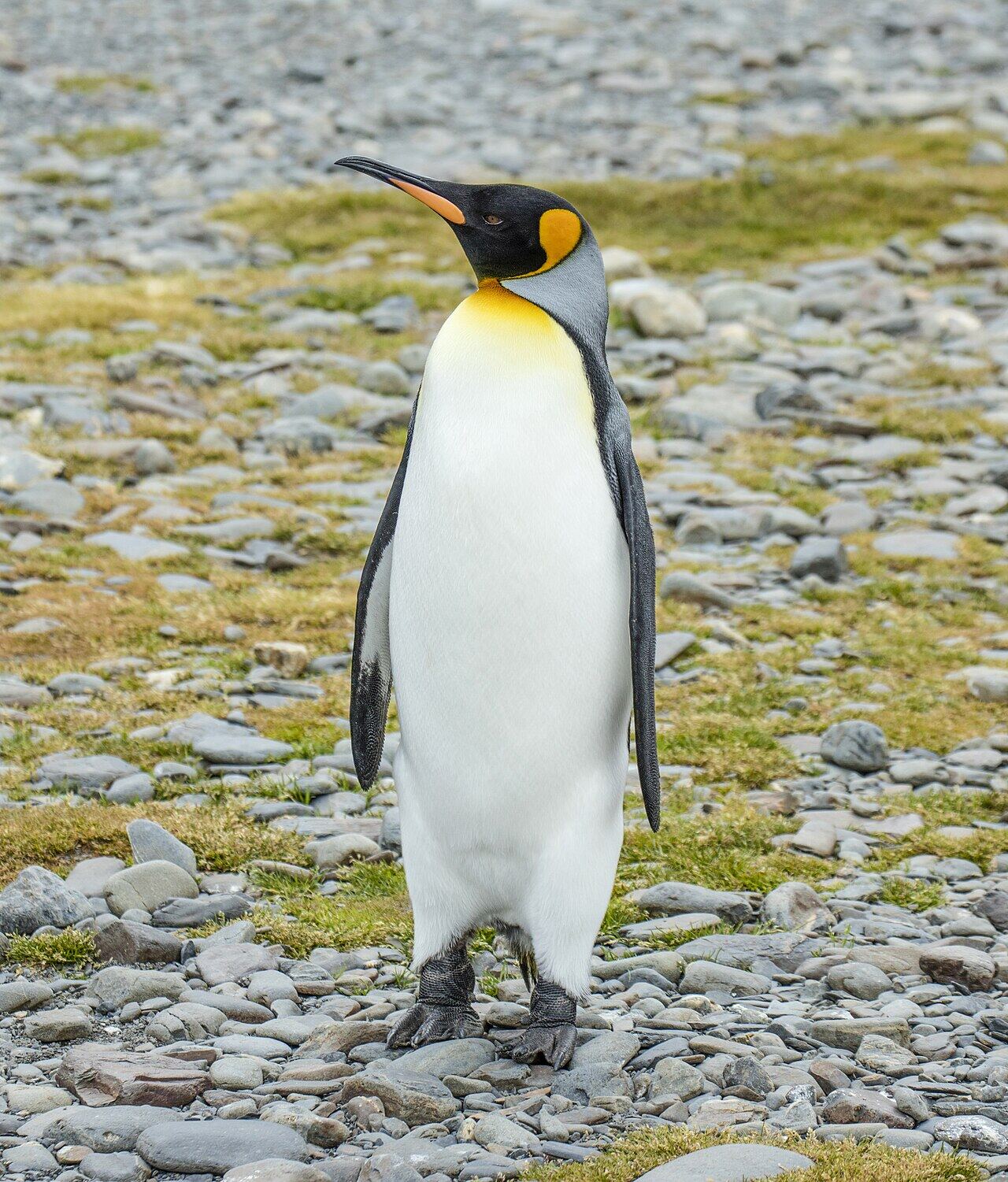
King penguin with bright orange ear patches

King penguin

Aptenodytes patagonicus

The second largest, with bright orange ear patches. Kings live on sub-Antarctic islands like South Georgia. Raising a single chick takes over a year, so a pair can breed at most twice every three years.

Photo: Godot13, CC BY-SA 4.0, via Wikimedia Commons

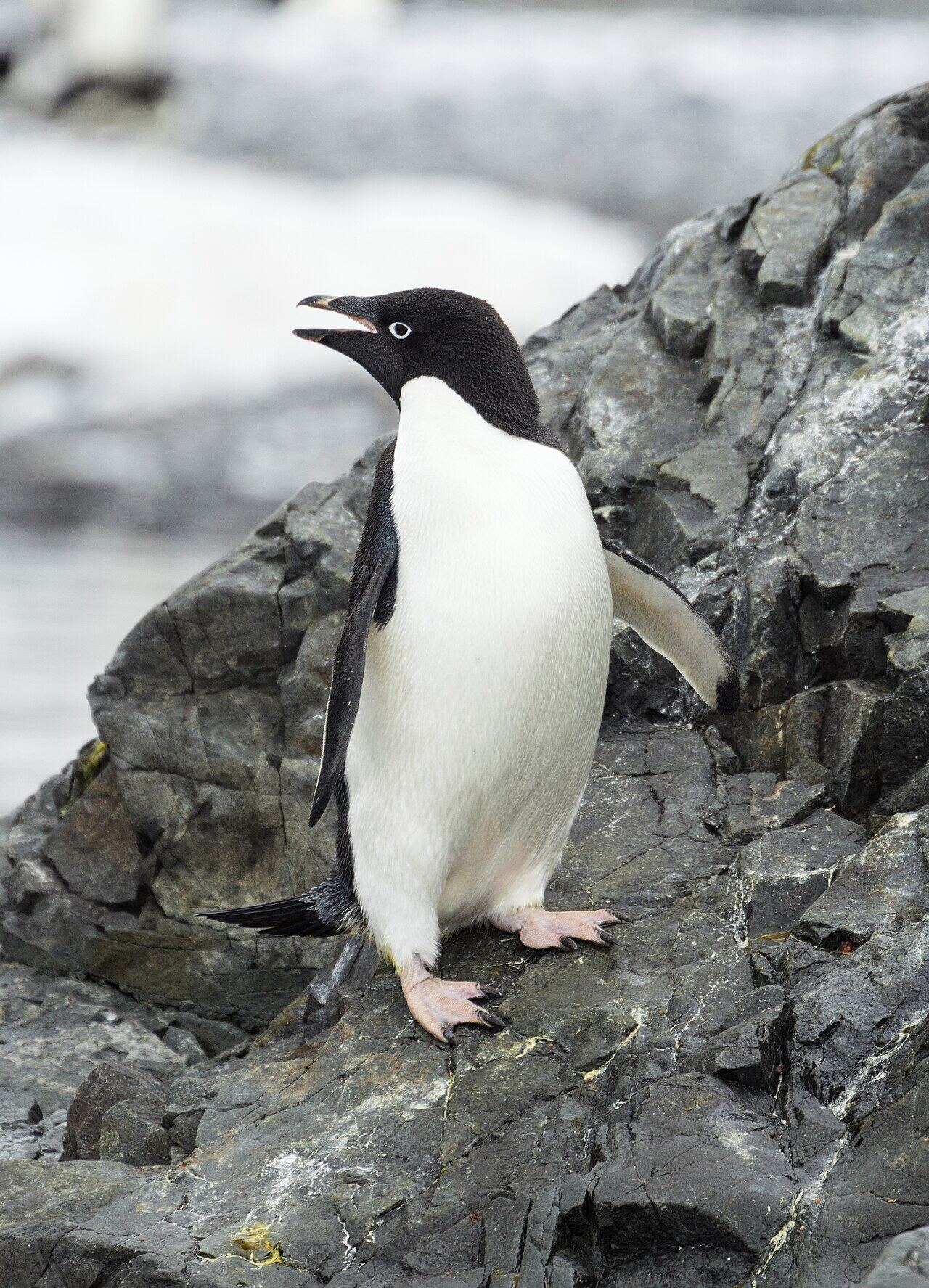
Adélie penguin with a white eye ring

Adélie penguin

Pygoscelis adeliae

The classic tuxedo penguin, with a white ring around each eye. Adélies nest along the Antarctic coast and build their nests from small stones, which neighbors are known to steal.

Photo: Godot13, CC BY-SA 4.0, via Wikimedia Commons

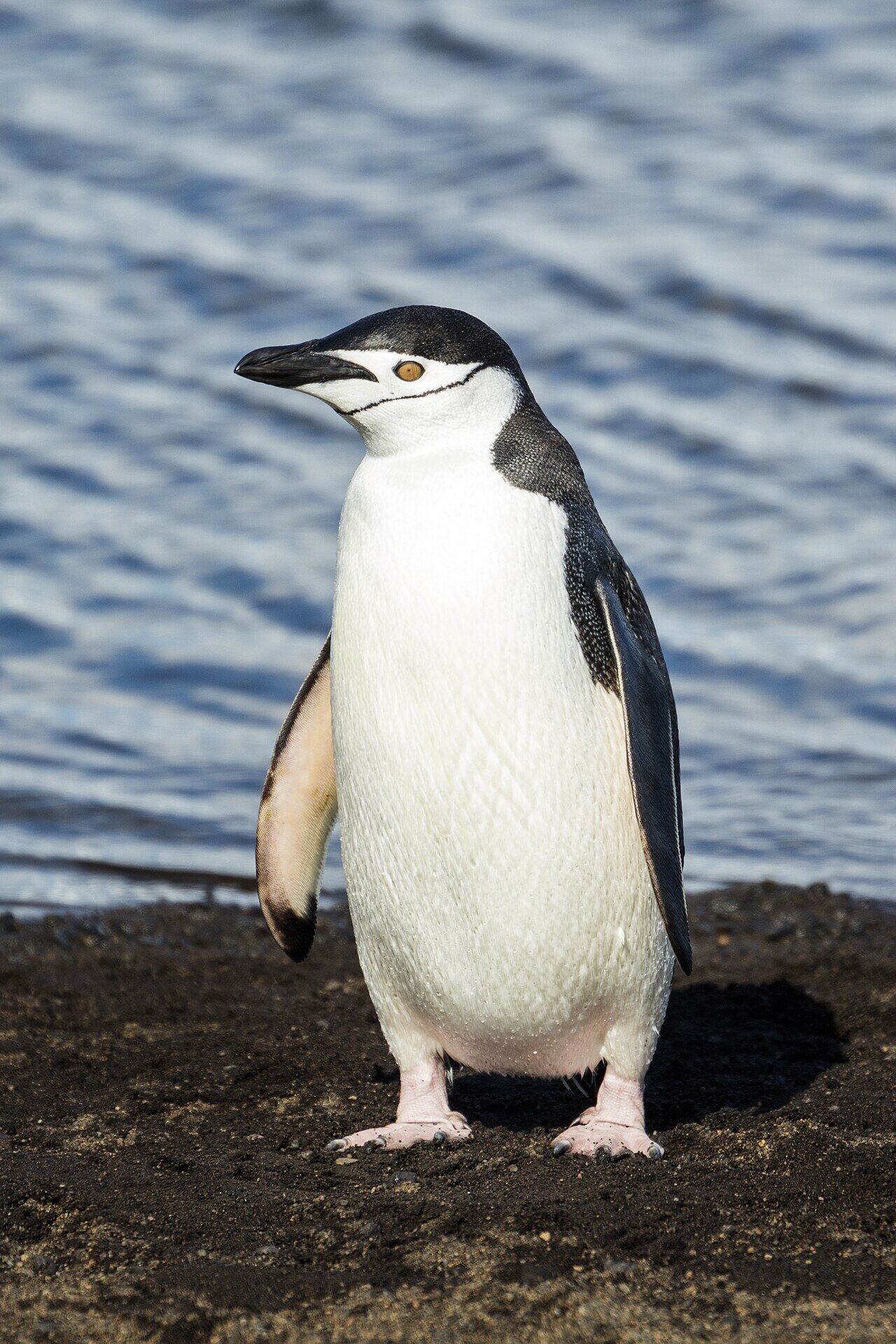
Chinstrap penguin showing the thin black band under its chin

Chinstrap penguin

Pygoscelis antarctica

Named for the thin black line under its chin, like a helmet strap. Chinstraps crowd onto rocky islands around the Antarctic Peninsula and are one of the most numerous penguins.

Photo: Godot13, CC BY-SA 4.0, via Wikimedia Commons

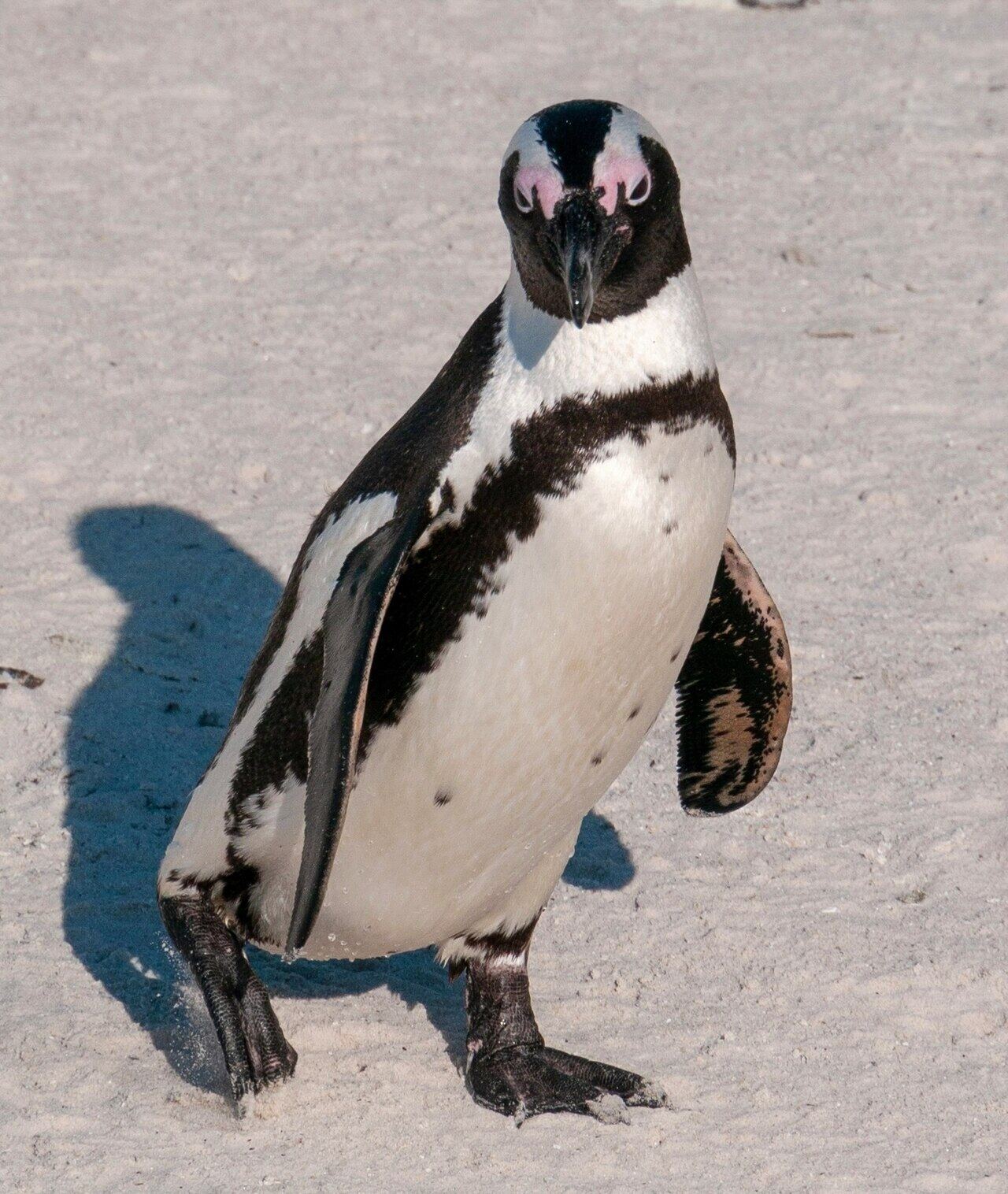
African penguin on a sandy beach

African penguin

Spheniscus demersus

Lives on the coasts of South Africa and Namibia, and nicknamed the jackass penguin for its donkey-like bray. Its numbers have collapsed with overfishing of sardines and anchovies, and it is now critically endangered.

Photo: Matti Blume, CC BY-SA 4.0, via Wikimedia Commons

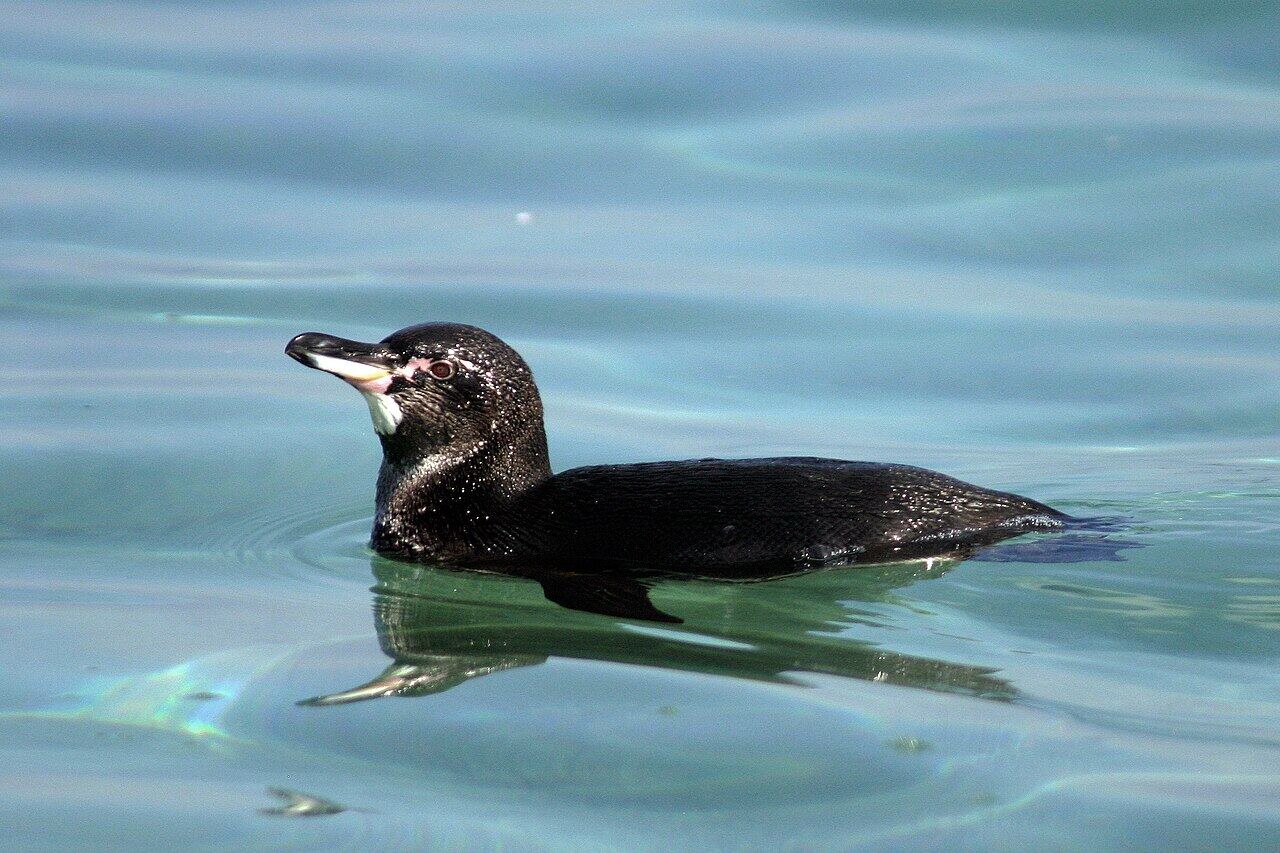
Galápagos penguin standing on dark volcanic rock

Galápagos penguin

Spheniscus mendiculus

The only penguin found north of the equator, kept alive by cold, nutrient-rich currents. To stay cool it pants, holds its flippers out to shed heat, and shades its feet.

Photo: Charles J. Sharp, CC BY-SA 3.0, via Wikimedia Commons

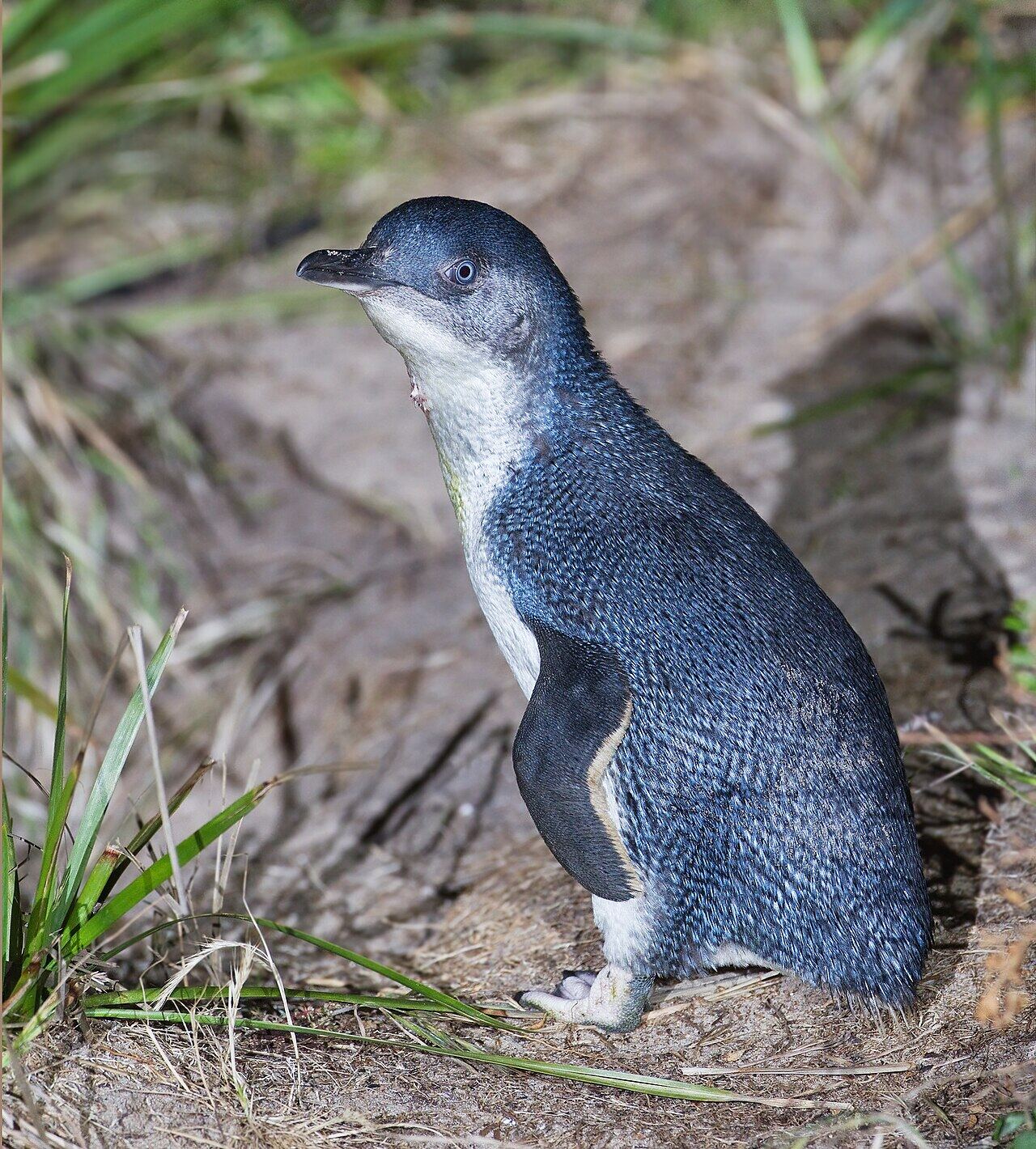
Small blue-grey little penguin

Little penguin

Eudyptula minor

The smallest penguin, about 1 kg, with slate-blue feathers. Little penguins live in southern Australia and New Zealand, spend the day at sea, and waddle ashore in groups after dark.

Photo: JJ Harrison, CC BY-SA 3.0, via Wikimedia Commons

Not just ice

Almost every penguin lives in the Southern Hemisphere, but only a few depend on Antarctic ice. Cold ocean currents carry them much farther north.

Antarctica

Emperor and Adélie penguins, on sea ice and the coastline itself.

Sub-Antarctic islands

King, gentoo, macaroni and rockhopper colonies on South Georgia, the Falklands and beyond.

South America

Magellanic and Humboldt penguins along the coasts of Argentina, Chile and Peru.

Southern Africa

African penguins on beaches and islands near Cape Town and up into Namibia.

Australia and New Zealand

Little penguins, plus New Zealand's yellow-eyed and crested penguins.

Galápagos

The Galápagos penguin, right on the equator.

Fun facts

  • They drink seawater. A gland above each eye filters salt out of the blood, and the salty fluid drips off the bill.
  • Gentoos are the speedsters. They can reach about 36 km/h underwater, the fastest of any penguin.
  • Penguins and polar bears never meet. Polar bears live in the Arctic and penguins in the south, so the classic cartoon pairing is fiction.
  • Huddles rotate. Emperor penguins take turns moving from the windy edge of a huddle into the warm middle.
  • Pebbles matter. For Adélie and gentoo penguins, a good stone is nest material, and offering one is part of courtship.